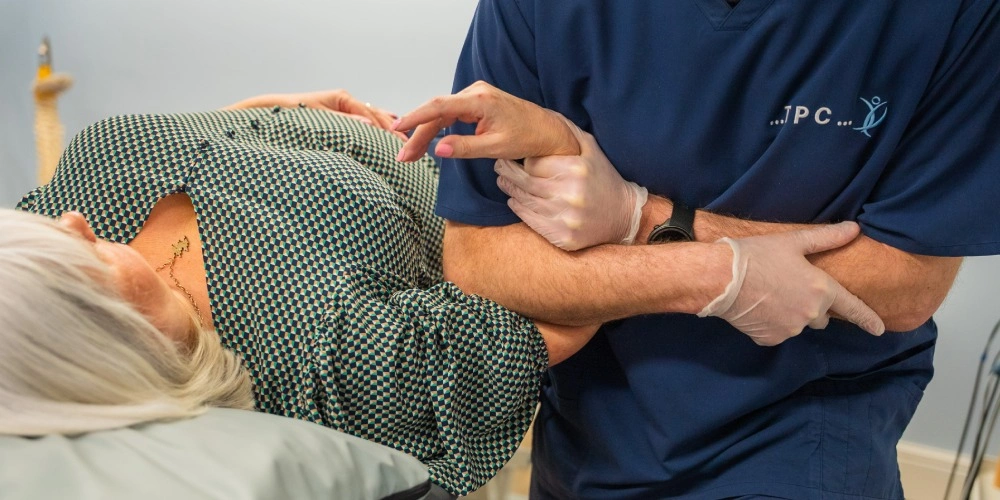
Shoulder Pain Treatment in Sittingbourne & Sheerness
Pain in the shoulder can limit many routine movements, from reaching and lifting to dressing or resting at night.
Our physiotherapy team at The Physiotherapy Centre offers comprehensive shoulder assessment and treatment in Kent. We aim to identify the source of the problem and support your recovery with targeted therapy and rehabilitation.
Early diagnosis and treatment often prevent persistent pain and restricted movement.

The shoulder is one of the most mobile joints in the body which also makes it vulnerable to strain and irritation. Common causes we treat include:
 Rotator cuff related shoulder painShoulder impingementBursitisPostural strainPost-surgical rehabilitationFrozen shoulder (adhesive capsulitis)Tendon irritationArthritisSports injuries
Many patients assume shoulder pain will “settle on its own”. While mild cases can improve, ongoing pain often leads to protective movement patterns, increasing stiffness and prolonging recovery.
A professional assessment provides clarity and reassurance.
At our clinics, your appointment begins with a detailed consultation.
Your physiotherapist will:
We believe patients recover better when they understand their condition. You will leave your assessment knowing what is causing your pain and what the plan is to improve it.
Request your free brochure or speak with our physiotherapists through a complimentary 15-minute telephone consultation.
We do not provide generic exercise sheets. Your treatment plan is tailored specifically to your presentation, goals and lifestyle.
Treatment may include:
Targeted Rehabilitation Exercises
Progressive strengthening to restore control and reduce strain on irritated structures.
Manual Therapy
Hands-on techniques to improve mobility and reduce stiffness where appropriate.
Movement Retraining
Correcting faulty patterns that may be perpetuating symptoms.
Education & Activity Guidance
Clear advice on what to continue, modify or temporarily avoid.
Where clinically appropriate, additional modalities may be considered as part of a comprehensive plan.
Most patients begin noticing meaningful improvements within the first few sessions when following their rehabilitation plan consistently.
Frozen shoulders can feel particularly worrying due to increasing stiffness and night pain.
This condition typically progresses through stages. Early assessment allows us to guide you safely through each phase, maintaining as much movement and strength as possible while managing pain effectively.
Many patients are relieved to learn that frozen shoulder is treatable and, with the right management, function can gradually be restored.
Early intervention often shortens recovery time and reduces the risk of chronic stiffness.
You should consider booking an appointment if:
Shoulder pain has lasted more than 2-3 weeksPain is disturbing your sleepMovement is becoming restrictedThe shoulder feels weak or unstableSymptoms are affecting work or exerciseThis depends on the diagnosis and duration of symptoms. Many patients notice improvement within 3-6 sessions, though frozen shoulders and long-standing problems may require longer rehabilitation.
Yes. While frozen shoulder follows natural stages, physiotherapy helps manage pain, maintain mobility and support recovery through each phase.
No. You can book directly with our physiotherapists without a GP referral.
Complete rest is rarely advised. Guided, controlled movement usually promotes better long-term outcomes.
We proudly serve patients across Sittingbourne and Sheerness with three convenient clinic locations.

39B High Street, Sittingbourne, Kent ME10 4AW

| Monday | 9:00AM – 2:30PM |
| Tuesday | 8:00AM – 5:00PM |
| Wednesday | 8:00AM – 8:00PM |
| Thursday | 8:00AM – 5:00PM |
| Friday | 8:00AM – 5:00PM |
10 Conqueror Court, Sittingbourne, ME10 5BH
| Tuesday | 8:00AM – 6:00PM |
| Thursday | 8:00AM – 8:00PM |
| Friday | 8:00AM – 5:00PM |
| Saturday | 8:00AM – 4:00PM |

St Georges Medical Centre, Sheerness, Kent ME12 1QU

| Tuesday | 9:00AM – 6:30PM |
| Wednesday | 9:00AM – 5:00PM |
| Friday | 9:00AM – 4:00PM |